
How Dual-Energy X-Ray Screening Detects Threats
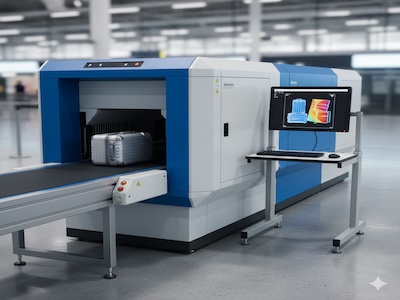
Dual-energy X-ray transmission (DEXRT) systems represent the current standard in aviation security and high-throughput cargo inspection. By exploiting the differential absorption characteristics of materials at two distinct energy spectra, these systems enable automated material discrimination without physical bag searches.
Physical Principles of Dual-Energy Imaging
Conventional single-energy X-ray systems produce grayscale images based solely on density and thickness. Dual-energy systems transmit X-rays at two energy levels—typically a low-energy beam (60-80 keV) and a high-energy beam (120-160 keV). The ratio of absorption between these two energies creates a material-specific signature.
Organic materials (carbon-based compounds, explosives, narcotics) exhibit high absorption at low energies relative to high energies, producing a characteristic spectral fingerprint. Inorganic materials (metals, ceramics, glass) demonstrate the inverse relationship. This physical divergence enables color-coded threat visualization.
Automated Threat Recognition (ATR)
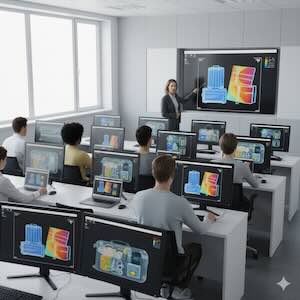
Modern checkpoint systems integrate machine learning algorithms trained on millions of threat images. The Threat Image Projection (TIP) protocol—mandated by TSA—injects synthetic threat objects into live scanner feeds to maintain operator vigilance and performance metrics.
ATR systems analyze shape, density, effective atomic number (Zeff), and spatial distribution patterns. When anomaly scores exceed predetermined thresholds, the system flags the item for manual secondary screening or explosive trace detection (ETD).
Regulatory Framework and Standards
The Transportation Security Administration (TSA) certifies screening equipment under the Air Cargo Screening Technology List (ACSTL) and the Qualified Anti-Terrorism Technologies (QATT) program. International standards are governed by ECAC (European Civil Aviation Conference) and ICAO (International Civil Aviation Organization) protocols.
All systems must demonstrate:
- Probability of Detection (Pd): >95% for standardized threat articles
- False Alarm Rate (FAR): <5% to maintain operational throughput
- Penetration capability: Minimum 34mm steel equivalency for cabin baggage systems
- Radiation safety: <1 µSv per scan (FDA 21 CFR 1020.40 compliance)
Emerging Technologies: CT and AI Integration
Computed Tomography (CT) screening represents the next generation, providing 3D volumetric reconstruction and enhanced explosive detection capabilities. TSA has authorized CT systems to allow laptops and liquids to remain in bags, significantly reducing checkpoint friction.
Artificial intelligence models—particularly convolutional neural networks (CNNs)—now achieve threat detection accuracy exceeding human operators in controlled testing environments. However, adversarial testing and edge-case generalization remain active research domains.
Operational Deployment Considerations
System selection requires analysis of throughput requirements (bags per hour), physical footprint constraints, power infrastructure (typically 15-30 kW for checkpoint units), and total cost of ownership including maintenance contracts and operator training cycles.
For cargo and freight applications, high-energy linear accelerator (LINAC) systems operating at 3-9 MeV provide penetration capability for fully loaded ISO containers. These systems require radiation shielding infrastructure and certified radiological safety programs.